The apex of an isosceles triangle
Midnight's ChildrenThe apex of an isosceles triangle is Saleem’s image for the precarious balance from which he tells his story: memory and the present form its two supporting sides, while he occupies the point above them. The metaphor makes Padma’s role structural, not incidental; her presence steadies the narrator, and her absence threatens to reduce his intricate perspective to a line.
The Triangle of Memory and the Present
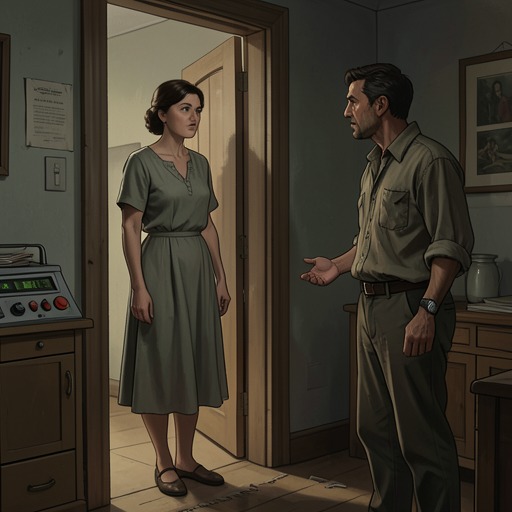
Saleem imagines himself at the triangle’s apex, upheld equally by two powers he calls the wild god of memory and the lotus-goddess of the present. The image gives his narration a geometry: the past and present are distinct but mutually supporting, and his vantage point depends on their balance. Without that support, he fears losing the layered perspective that allows him to move between remembered history and immediate life.
The triangle also makes the act of storytelling dependent on companionship. Padma is not one of its two temporal supports, but her earthy presence keeps Saleem grounded as he narrates. Her ignorance and superstition counterweight what he calls his miracle-laden omniscience; she supplies a resistance to the narrator’s tendency to expand into grand historical and mythic claims.
Absence and the Threat to Narrative Balance
When Padma leaves, Saleem feels the balance fail. He misses not only her company but the necessary ear to whom his story is addressed, and describes cracks widening through his body. The metaphor’s threatened collapse—from a supported apex to a narrow, one-dimensional line—registers the loss of both an audience and the corrective perspective that audience provides.
Saleem first disguises this loss with questions about how he can do without Padma, then admits plainly that he misses her. That turn from rhetorical uncertainty to direct recognition exposes the emotional fact beneath the geometrical conceit: the narrator’s apparent self-sufficiency depends on the person who listens.
Restoration Through Padma’s Return
After Padma returns to sit at his feet and urge him onward, Saleem says the triangle’s base is secure and his fluency is returning. Her renewed presence does not erase his physical incapacity, which he attributes to the Widow’s actions, but it restores the conditions in which he can continue writing. The image therefore distinguishes bodily recovery from narrative recovery: he remains damaged, yet the act of telling becomes possible again.
Padma’s search for virility herbs, despite failing to reverse Saleem’s incapacity, briefly connects his final days to ancient learning and sorcerers’ lore. That episode leads him to set the national chronology beginning with 15 August 1947 beside the vastly longer cycle of Kali-Yuga, which began in 3102 B.C. and is said to last 432,000 years. The return of proportion is part of the triangle’s meaning: Padma’s presence helps Saleem hold personal time and immense historical or cosmological scales together without letting either overwhelm the other.